It’s the elusive question: What do brands actually want from influencers, and what do influencers want from brands?
Flat fees, commission, hybrid models, promo codes, gifting, and paid usage rights are all on the table, so it can be hard for brands to structure a partnership that gets the most bang for their budget. For influencers, finding brands that their audience will genuinely connect with and that are worth their time can feel like a never-ending hamster wheel.
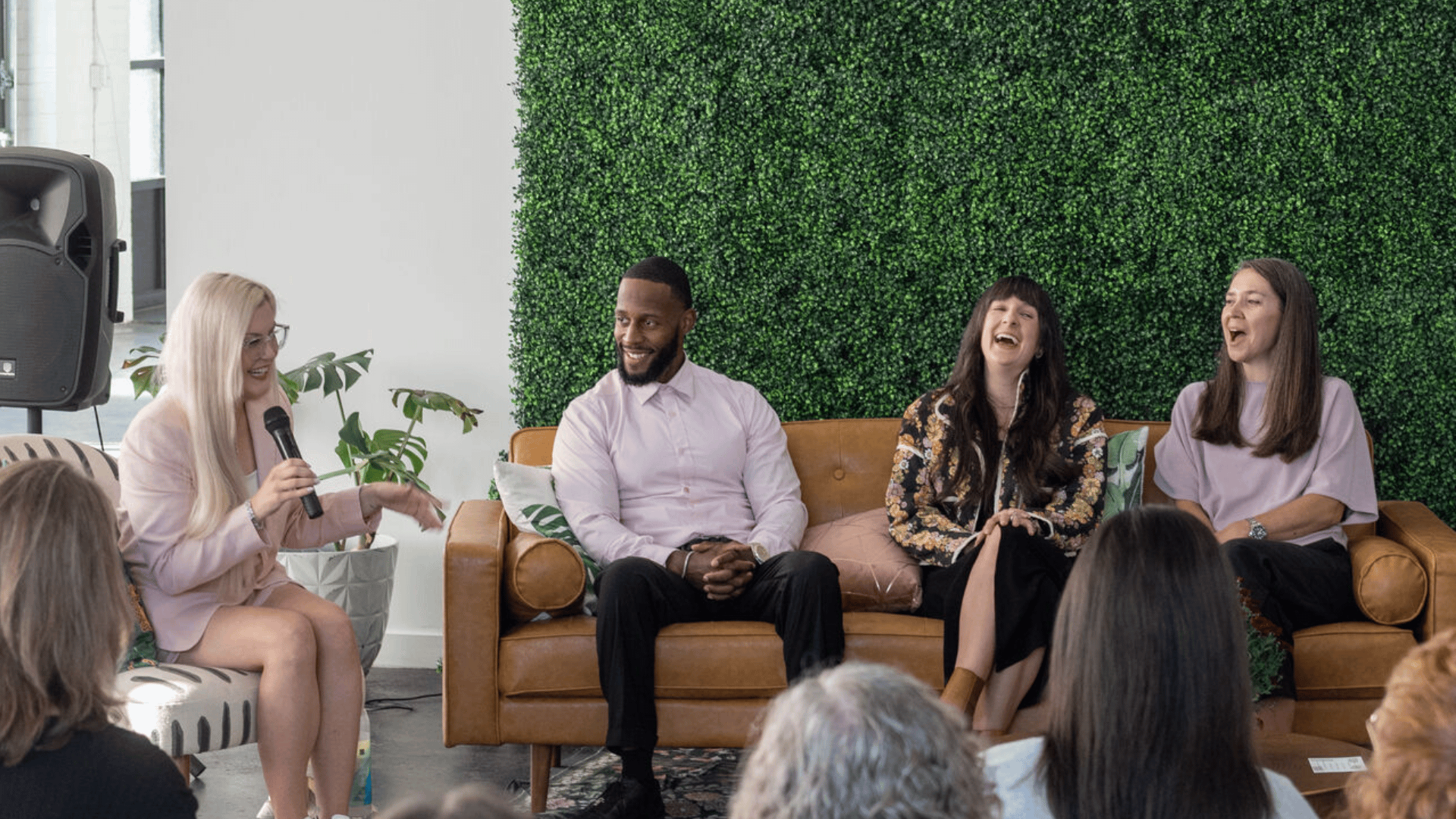
To get some answers, we attended “The Influencer Effect,” a panel on what brands want, how creators deliver, and the high-stakes business of attention, hosted by the AMA Richmond chapter.
The Panel
- Chloé Boss, award-winning social media strategist and Senior Lead at Influential
- Ishmael Sandiford, fitness creator and entrepreneur known as “The Black Superman”
- Johanna Voss, COO for Talent Management Agencies
- Liz Thomson, the blogger behind I Heart Vegetables
Jason Roop, founder of Springstory, a Richmond-based PR, content marketing, and talent management agency, moderated the panel.
Here are our top nine takeaways: four for brands and five for creators.
For Brands
Know your “why” before you reach out.
If you’re sending out product and hoping an influencer makes something go viral, it’s time to rethink your strategy. Chloé Boss recommends deciding on three things up front.
- Your primary goal (e.g., conversions)
- Your audience (e.g., dog-owning women in their 20s–30s in Nebraska)
- Your core offering / the why behind the post (e.g., a new collar launch)
Once you’ve nailed these down, you can write your briefs, but make sure to treat your creator like a consultant. You bring the idea to the table, but successful campaigns have creators bring it to life in their own way.
Look beyond 24-hour metrics.
Liz Thomson pointed out that not every platform is built for 24-hour discovery. On Pinterest, YouTube, blogs, and other search-driven platforms, people can find content months or even years after it’s published. Even Instagram posts can now show up in Google search results, with the recent Google Search Console compatibility update. If you judge a campaign only on its first-day performance, you’re missing most of the story.
Plan earlier than you think.
If you’re reading this in October and just had an idea for a Halloween creator collab, you’re too late. Chloé works with Fortune 500 brands, and their influencer negotiations can start six months to a year before anything goes live. Now is the time to lock in your 2027 marketing calendar and start outreach.
Get specific about what performs.
Go deeper than “reels vs. carousels.” How long is the video? Does it use a voiceover, or is it direct to camera? Is the caption short or long? Ishmael Sandiford noted that Instagram rewards repeatability. If a style and format works for your brand, keep using it.
For Creators
Think beyond Instagram.
Liz, who built her brand on her blog, encouraged creators to look past Instagram. Brands are also looking for partners on Substack, on podcasts, and for in-person events. A multi-platform presence also helps diversify your income.
Find your “blue ocean.”
Your niche is probably crowded, so you need a fresh angle. Ishmael stressed the importance of standing out. For him, that meant hosting fitness events in Richmond, which few other creators were doing at the time. The question to ask yourself is: what’s your unique selling point?
Share your metrics, and keep sharing them.
Liz even follows up with brands years later when she notices a post is still getting views. The more open you are about your performance, the more likely brands are to book you again. Send results at 24 hours and again at 7 days, and keep the brand in the loop.
Never hide your like count.
One more important tip from Chloé: never hide your like count. Many influencer platforms treat hidden likes as lower engagement when brands are vetting creators.
Avoid creator red flags.
Many brands won’t work with creators whose content includes profanity (even in the audio), political rants, or suggestive material. Larger brands may review up to three years of your past posts, so think twice before you hit publish.
Plan for 2027 Now
As brands head into 2027, the time to plan a creator strategy is now, not the month before launch. Set clear goals, learn which formats actually perform for you, and give partnerships months, not hours, to pay off.
Building a creator or affiliate program?
If you want a second set of eyes on it, we’d love to chat.
Let’s talkThank you to AMA Richmond for hosting, and to Chloé, Ishmael, Johanna, Liz, and Jason for such a candid conversation.
Image credit: AMA Richmond