
If you run a direct-to-consumer brand, a sporting goods company, or any business that has spent the last decade building revenue through content and affiliate marketing, this piece is about you.
Google just changed the rules. Not in a “here comes another algorithm update” way. In a structural, permanent, we-built-a-different-business way. And most brands are not paying attention yet.
We are going to tell you exactly what is happening, what it costs you, and what the responses are that actually work.
Act One: How You Got Here
For the better part of a decade, the model worked beautifully.
You created great products. Publishers and creators wrote about them. Shoppers found those reviews through Google, clicked the affiliate links, landed on your product pages, and bought. Commissions flowed. Google sent the traffic. Everybody got what they needed.
Affiliate marketing, for golf brands and outdoor retailers especially, became a legitimate top-line revenue channel. Not a nice-to-have. A real, measurable piece of the business. We have seen affiliate drive 15 percent of total online sales for a leading golf retailer. That kind of contribution does not happen by accident.
But the engine powering all of it was Google traffic. And that traffic was always on borrowed time.
Here is where things stand today. Zero-click searches now account for 60 percent of all Google queries. That means more than half the time someone types something into Google, they get their answer and leave without clicking a single link. HubSpot, one of the most well-resourced content operations on the internet, estimates it has lost somewhere between 70 and 80 percent of its organic traffic. Some publishers in specific categories are down nearly 90 percent.
These are not small blogs or poorly optimized sites. These are companies that employed entire teams of SEO professionals for years and built their business on Google traffic.
The model that worked for a decade is being dismantled. Not gradually. Now.
Act Two: The Walled Garden Completes Itself
To understand what is actually happening, you need to see the pieces together. Google did not make one change. They built a three-layer system over the past two years, and the final piece just clicked into place.
AI Overviews took the click
Google replaced the top of most search results with an AI-generated answer. Instead of clicking through to an article, the shopper reads Google’s summary. The article still “ranks.” The publisher never sees the traffic. The informational queries that drove review content, “best golf rangefinder for beginners,” “top trail running shoes for wide feet,” these are exactly the queries AI Overviews now answer directly.
AI Mode took the research conversation
AI Mode turned Google into a conversational research assistant. A shopper can now spend ten minutes comparing golf irons, asking follow-up questions, narrowing their options, and building a purchase decision, all inside Google, without visiting a single product page or review site. The mid-funnel comparison phase that affiliate content has always served so well is being handled by Google’s AI.
Google Universal Cart is taking the transaction
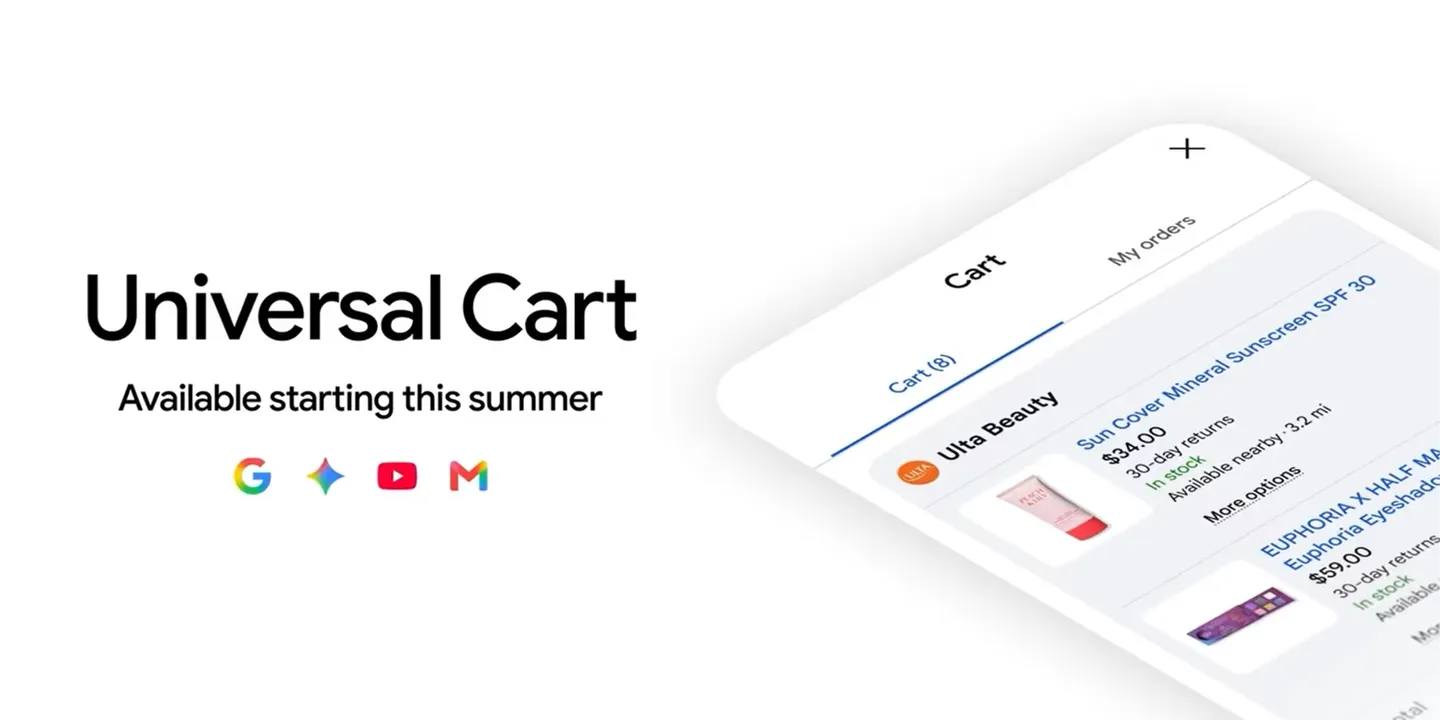
This is the part most brands have not fully absorbed yet, and it is the most consequential development of the three. A shopper can now search for a product, see it in Google’s results, and complete the purchase through Google Pay without ever visiting your website. Discovery, research, comparison, and purchase, all inside Google’s ecosystem, start to finish.
Google Universal Cart and Google Universal Checkout: The Transaction Layer
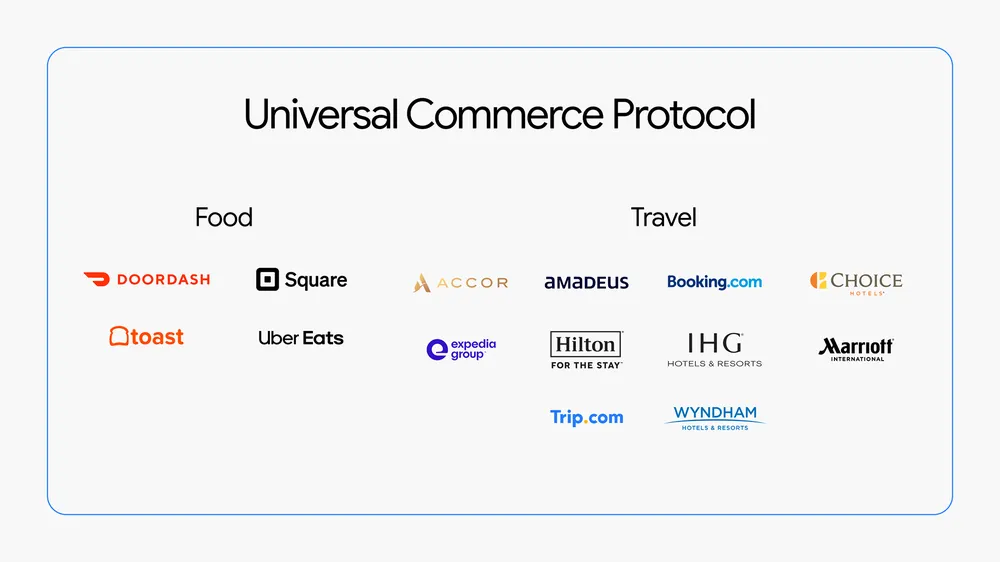
In January 2026, Google launched the Universal Commerce Protocol, known as UCP, an open technical standard co-developed with Shopify, Wayfair, Target, Walmart, and Etsy. In May 2026, UCP-powered checkout expanded from Google’s AI Mode into standard Google Search results.
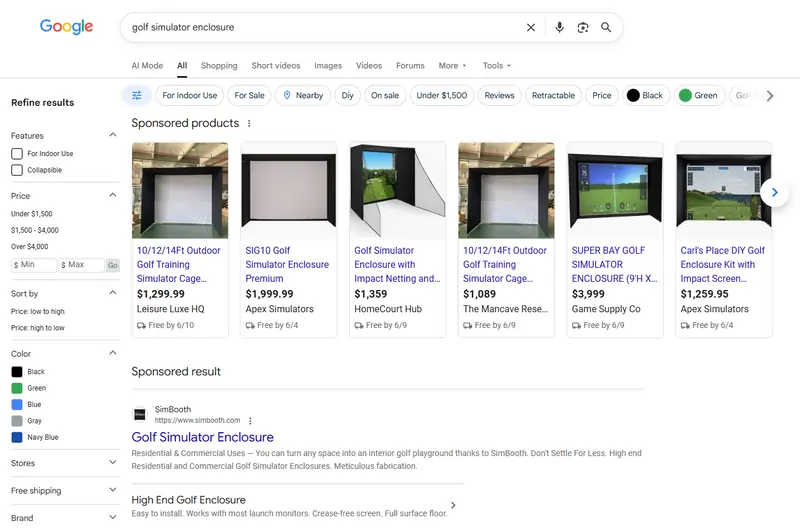
What this means in practice: a native “Buy” button now appears inside product detail overlays directly on Google’s search results page. Shoppers with Google Pay credentials can complete a purchase without visiting the retailer’s website at all. Wayfair is already live on this. Shopify merchants are being onboarded through a native integration. More than 20 companies including Visa, Mastercard, Stripe, Adyen, and Best Buy have endorsed the protocol. UCP is now expanding to Canada and Australia, with the UK to follow.
As one industry analyst summarized it: an impression in Google Search can now lead to a completed transaction without a single click to the retailer’s site.
An impression in Google Search can now lead to a completed transaction without a single click to the retailer’s site. That is not a future scenario. It is live today.
Barry Schwartz, Search Engine Land · May 2026The Amazon Parallel: A Pattern You Should Recognize
If this sounds familiar, it should.
Amazon built the same architecture fifteen years ago, and the brands selling through Amazon today are living with the consequences. Your products are on their platform. Customers find them, buy them, leave a review, and the next purchase is recommended by Amazon’s algorithm, which may or may not surface your product again depending on factors you do not fully control. Amazon owns the customer relationship. You fulfilled the order.
Google is building the same system for the broader internet. The difference is that brands at least chose to sell on Amazon. Nobody chose to have Google turn their organic search traffic into a Google shopping experience that bypasses their website entirely.
The financial incentive behind this is not subtle. A federal court ruled in 2024 that Google illegally maintained its search monopoly. This is the finding of a U.S. District Court, not an industry opinion. Google generates over $200 billion in annual revenue, the vast majority from advertising. Every publisher that loses organic traffic becomes a potential paid search advertiser. Every brand whose affiliate program attribution collapses gets nudged toward Performance Max and Google Shopping campaigns.
Lose the organic channel. Pay for the paid channel. That is the business model.
What This Costs You Specifically
Let’s be direct about the three things this takes from brands that do not respond.
Your affiliate tracking breaks. Traditional affiliate tracking depends on a click, a cookie, and a redirect to your website. Google Universal Checkout removes all three. When a customer completes a purchase inside Google, your affiliate platform never sees the transaction. The commission disappears, even if a creator or publisher directly influenced that purchase. Google has published no solution to this. The industry knows it is a problem. Nobody has fixed it yet. The best near-term workaround is promo codes tied to each creator, which survive inside a Google checkout because they are passed as data, not tracked as a click.
Your SEO affiliate partners are losing their traffic source. The publishers in your program who write review and comparison content and rank on Google are seeing their traffic collapse. When those publishers lose traffic they lose revenue, and when they lose revenue they reduce their content output or exit your program. Your affiliate revenue follows. If your program is heavily weighted toward SEO content publishers, you are sitting on ground that is actively eroding.
Google’s system creates downward pressure on your pricing. Google Universal Cart automatically monitors price drops, surfaces price history, and compares options across merchants. For brands whose products end up inside this system, the AI is optimizing for the customer’s best price. That is great for shoppers. It is systematically bad for margins, especially for brands competing against larger players with better unit economics.
Act Three: The Moves That Actually Work
There are channels that sit outside Google’s control, and they all share something in common: they are built on direct relationships that do not route through Google’s infrastructure.
Move One: Get visible to AI agents through schema and Google UCP readiness
If AI agents are making purchase recommendations before a customer ever types a query, your job is to be the source those agents can find, trust, and transact with. That requires two things working together.
The first is structured data and schema markup. This is the machine-readable layer of your website that tells AI agents what your products are, what they cost, what reviewers said, and why your content is credible. JSON-LD markup for Product pages, Review pages, Article content, and comparison content is how you stay in the recommendation without paying for the placement. It is the one form of Google presence that lives on your domain, under your control. Most brands have broken or incomplete schema. Every error is a page that AI agents may skip entirely.
The second is Google UCP readiness. The Universal Commerce Protocol is an open standard. Brands that implement it correctly get a “Buy” button in Google Search. Brands that have not are invisible in that experience. For Shopify merchants, this is largely a configuration question. Clean, structured, machine-readable product data is no longer optional. It is the primary surface through which AI agents decide whether to recommend you or skip you.
Clean, structured product data is no longer a technical SEO checkbox. It is the visibility layer in an AI-mediated commerce world. Get it right and agents find you. Get it wrong and they skip you without a second thought.
Revit Digital · Agent Readiness Analysis, 2026Move Two: Build creator partnerships that Google cannot intermediate
A podcast host recommending your rangefinder to 40,000 loyal listeners does not route through a Google SERP. A YouTube reviewer with 80,000 subscribers who trusts your brand is not a click Google can intercept. An email newsletter reaching 60,000 golfers is a channel a brand reaches directly, every time it sends.
These are not consolation prizes for brands that lost their SEO edge. They are the most durable customer acquisition assets available right now, precisely because they are built on direct trust between a creator and their audience. No algorithm update, AI Overview, or Universal Cart integration can get between a podcast host and their listeners at the moment of a genuine recommendation.
The creator categories that hold up best in the current environment, ranked by how well their attribution survives the shift: podcasters are the most resilient because their recommendations happen before any search query is even formed, and promo codes track conversions reliably without any click. Email publishers sit right behind them because the owned list means no algorithm between creator and audience. YouTube creators with loyal subscriber bases follow, because the subscriber relationship is direct even if some of their traffic comes from Google. Social creators with genuine community engagement are similarly durable. SEO content publishers are the most exposed category in your program today and should receive the least investment in new partner recruitment.
The affiliate channel, done right, is pre-intent marketing. You are in the room before the search happens. That is the version of affiliate that survives the walled garden, because it does not depend on Google at all.
Move Three: Prepare your product data infrastructure now
Whether or not you implement full Google UCP checkout integration immediately, the underlying work is the same and it benefits you across every surface where AI agents operate, including ChatGPT, Perplexity, Google AI Overviews, and Gemini. Brands that get cited inside AI-generated summaries earn 35 percent more organic clicks than those that do not. That number comes from current data on AI Overview behavior, and it is a signal worth taking seriously.
The practical starting point is a schema and structured data audit: find out what is broken, what is missing, and which fixes represent the largest traffic and visibility opportunity. Most brands are surprised by how much is wrong, and how straightforward the highest-priority fixes are once they are properly identified and ranked.
The Ground You Own
Here is the reframe that matters.
Everything Google gives you, organic rankings, Shopping listings, AI Overview citations, is rented. They set the rent. They can raise it overnight. They can convert your organic presence into a Google shopping experience and keep the customer relationship for themselves.
The brands that compound over the next three years are not the ones that optimize hardest for Google. They are the ones that invest in the two things Google cannot take: machine-readable product infrastructure that earns AI visibility on their own terms, and creator relationships built on direct audience trust that no platform update can overwrite.
Google is not breaking affiliate marketing. Google is breaking the specific version of affiliate marketing that depends on SEO traffic and last-click tracking links. The brands and agencies that recognize the difference early, and shift their programs toward owned-audience creators and clean product data, will compound while everyone else catches up. The window to get ahead of this is open right now. It will not stay open indefinitely.
At Revit Digital, affiliate management for golf, sports, and outdoor brands is what we do. We drove $1.5 million in affiliate sales over the last 12 months through our own digital assets, which means we understand the publisher and creator side of this equation from the inside. We have helped a leading golf retailer generate 15 percent of total online sales through affiliate. And we spent the past several months building something new in direct response to what we saw coming: an Agent Readiness audit that tells brands exactly where they stand on schema health, product feed quality, and Google UCP readiness, with a prioritized fix plan ranked by traffic and revenue opportunity.
If you are in golf, sports, or outdoor, and this piece is prompting you to look hard at how your affiliate program and product data are positioned for what comes next, that is the right instinct. The conversation starts with understanding where you actually stand.
Find Out Where You Actually Stand
Our Agent Readiness Audit covers schema health, product feed quality, and Google UCP readiness across your full site. You get a prioritized action report ranked by traffic and revenue opportunity, and a clear picture of what needs to change before your competitors figure this out first.
Leave a Reply